Conversational AI in healthcare apps is rapidly moving from a nice-to-have feature to a strategic necessity for healthcare enterprises. Many organizations face mounting challenges: long patient wait times, high administrative overhead, fragmented communication channels, and low engagement in digital care.
According to Cognitive Market Research, patients report improved access when conversational AI is deployed, roughly 65% people agreed that chatbots helped them get care more easily. The gap between patient expectations and healthcare delivery workflows is a barrier to growth, satisfaction, and competitive positioning.
Conversational AI in healthcare apps offers a compelling alternative by enabling 24/7 support, automating scheduling and follow-up, and providing a unified interface that integrates with patient data and workflows, thereby reducing manual workload, shortening response times, and enhancing the patient experience.
But the question is: how can enterprises integrate this modern technology into their applications or systems? In this blog, we’ll unpack how enterprises should act on this trend and how they can integrate this to achieve more success.
What Exactly is Conversational AI in Healthcare Apps?
Conversational AI in healthcare is one of the top healthcare app development trends, which means using smart chatbots and voice assistants to talk with patients in real time. These tools can understand questions, give answers, schedule appointments, and guide patients after treatment. Also, these systems work 24/7 without human intervention.
Healthcare enterprises are now adopting conversational AI to handle growing patient demands efficiently. It reduces waiting time, improves engagement, and frees staff for critical tasks. According to Grand View Research, the conversational AI in healthcare market is expected to grow at over 25% CAGR through 2033.
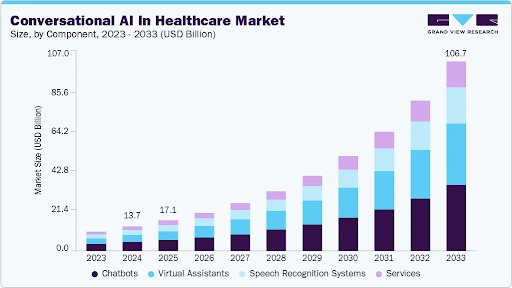
The report suggests that healthcare providers use conversational AI to maintain continuity of care and reduce hospital readmissions.
Advantages of Using Conversational AI in Healthcare Apps
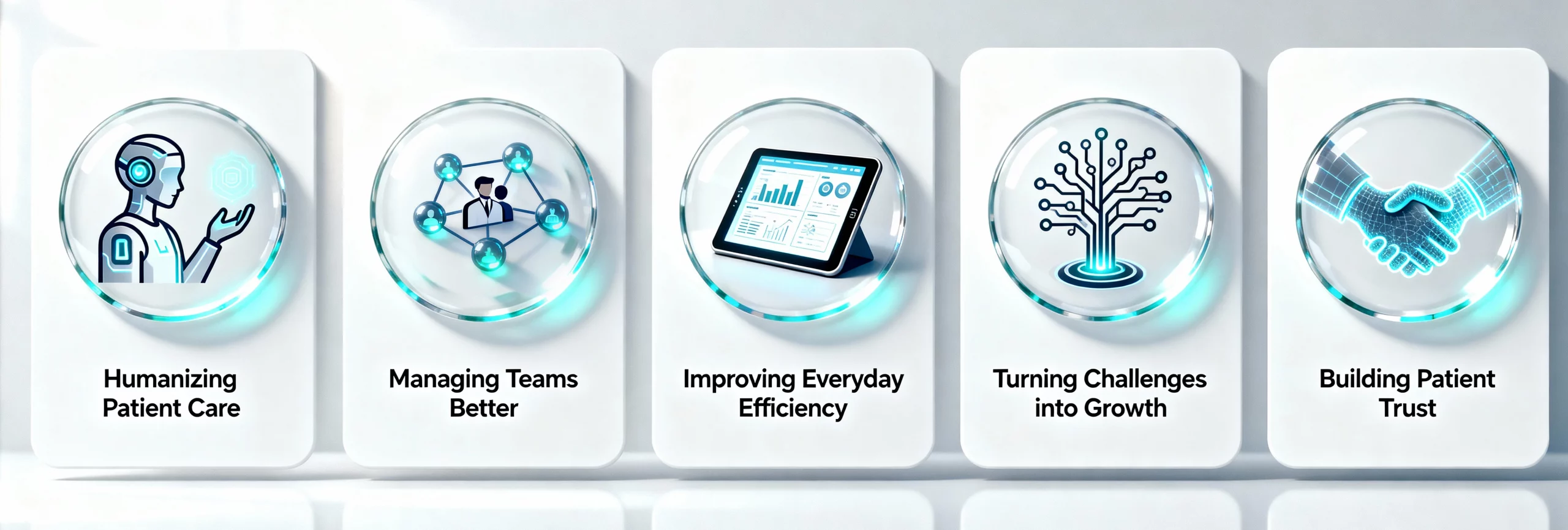
Ever since the advancements in technology, healthcare has been transforming and seeing new changes every year. The use of conversational AI technology in healthcare has revolutionized patient care, and it has also helped enterprises streamline their operations. Here are the advantages of this modern technology:
1. Humanized Care For Everyone
With the use of conversational AI technology in healthcare, you can make the patients feel that someone is always there for them. Whether it’s early morning or midnight, an AI assistant can book a slot, answer a query, and guide someone who has less knowledge. Having that kind of 24/7 presence makes patients go with you in every emergency.
2. Easing Work and Retaining Users
Every doctor or nurse feels burned out due to the paperwork they need to handle every day. However, conversational AI can’t replace that work, but it reduces a big bite of that load. This results in increasing face-to-face time with patients and a little less stress for them on a long shift day. Over time, this relief makes them satisfied with their job, and personal care helps enterprises retain users.
3. Boosting Overall Efficiency
Using conversational technology in healthcare helps several departments. It makes the whole system smoother than ever by speeding up scheduling, billing, follow-ups, and other interactions that clog up staff time. For hospitals, it reduces costs and errors, and patients get fewer delays.
4. Overcoming Challenges Effectively
The COVID-19 era showed us that demand in healthcare explodes overnight, and it requires every healthcare professional to get ready for the worst. With conversational AI in healthcare, enterprises can handle the wave of questions and make doctors focus on essential tasks. It can handle thousands of queries at once, making the system overcome hard challenges during difficult times. However, businesses need to hire app developers with prior experience to overcome these challenges more seamlessly.
5. Fostering Trust Through Compliance
Healthcare enterprises or hospitals can’t bear mistakes because they have to pay a hefty cost for even a small mistake. A missing note, a misplaced detail – all things are significant. Using HIPAA-compliant conversational AI for healthcare creates standardized records, making documentation cleaner and audit-ready. This level of consistency reassures regulators and patients that the information is safe and accurate, fostering trust.
Use Cases of Conversational AI in Healthcare
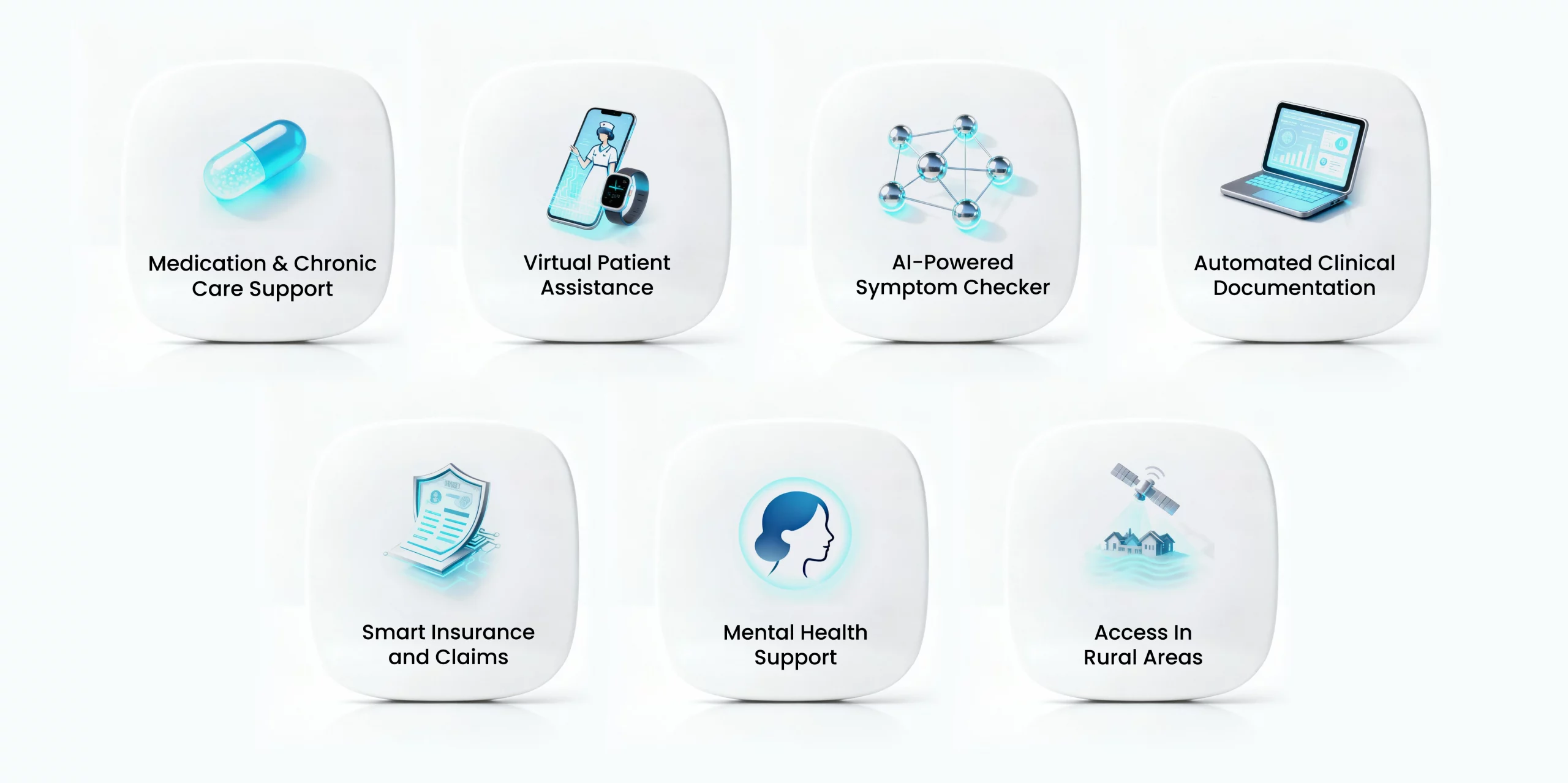
Now that you know the benefits of using this modern technology, it’s time to look at the use cases. Here’s how it’s working right now and providing measurable results:
1. Medication & Chronic Care Support
Many people face problems while managing long-term conditions, and they forget medication, resulting in big consequences. Using AI-powered check-ins and reminders makes it easier for people to be on track. Also, it blends medical data with gentle nudges to make patients feel supported.
Real-world example: Mount Sinai Medical Center partnered with HealthSnap to help patients with Remote Patient Monitoring (RPM) and Chronic Care Management (CCM) programs for diseases like diabetes, hypertension, heart failure, COPD, etc. They understood the need for moving towards conversational AI for disease management, enabling teams to spot early warning signs.
2. Virtual Patient Assistance
Healthcare is getting smarter by every passing day. Conversational AI can interact naturally with patients to help them with questions, directions, and appointments in a chat-like flow. It will make the patients feel valued by reducing friction from the first contact.
Real-world example: Intermountain Health developed Hyro to handle FAQs, guide patients to the relevant department, and schedule appointments. They acknowledged the power of chatbots in mobile apps, web, and voice channels to provide quick help to patients via text or call.
As per Hyro’s data, it has resolved 79% of incoming chats without human intervention, reducing patient wait frustration. It works because they provide patients with time slots, confirm details, and follow up.
3. AI-Powered Symptom Checker
When symptoms appear late at night, patients often rush to the ER out of panic. Conversational healthcare bots give them a safe first step. They ask simple, doctor-approved questions and guide them on what to do next. It’s quick, calming, and connects to real help when needed.
Real-world example: Mayo Clinic launched an AI-powered Nurse Virtual Assistant and integrated that with its electronic health record. It provided nurses with easy access to patient summaries, guidelines, and clinical policies. Now, it supports 9600+ nurses across inpatient and emergency care. The main reason behind its success is the mix of automation and safety.
4. Automated Clinical Documentation
Doctors spend a large part of their day typing medical notes and updating records after every consultation. It’s repetitive, time-consuming, and often takes attention away from patients. Conversational AI in healthcare solves this by listening to consultations and automatically generating structured notes in real time, capturing key details like symptoms, diagnoses, and prescriptions with accuracy.
Real-world example: Nuance DAX listens to everything during patient encounters and turns conversations into structured notes for the EHR. WellSpan Health launched it across specialties and reported an average of seven minutes saved per visit. It provided physicians with two extra hours a day. Doctors can see and edit every note before signing off, and that transparency builds confidence and keeps legal risk low.
5. Smart Insurance and Claims Help
Insurance should be easier for everyone. The use of conversational AI for healthcare operations simplifies coverage questions, eligibility checks, and claims filing. It provides patients with clearer answers and helps hospitals move paperwork faster while avoiding call center overload.
Real-world example: Helvetia opted for chatbot development that authenticates users, gathers details, and advances the claim. Their bot allows customers to upload photos, describe the issue, and track progress instantly. This results in cutting the processing time and reducing inbound support calls.
6. Mental Health and Counseling Support
Opening up about mental health is not the same for everyone. But stigma and long wait times make it worse. The use of conversational AI technology in healthcare creates a private, judgment-free first step while guiding users toward professional care. It makes people feel valued, supported, and heard in the right way.
Real-world example: Woebot offers cognitive behavioral support through chat. Health systems leverage it to supplement therapy, offer safe check-ins, and flag urgent risk. Clinical studies prove that Woebot users saw significant improvement in depressive symptoms within two weeks. The best thing about Woebot is handing the conversation to professionals when it suggests a crisis or complex needs.
7. Accessibility in Rural and Underserved Areas
Timely care is not guaranteed for patients living far from hospitals. The use of AI in healthcare can help you enhance patient care by providing 24/7 symptom assessment, care navigation, and language support. This way, conversational AI opens the best way to bring medical help close to those who need it the most.
Real-world example: Sutter Health integrated Ada Health’s AI symptom assessment and care navigation tools for automating conversational AI in healthcare. Ada helps them complete a symptom check, get triage advice, and direct them immediately into Sutter’s care pathways. With features like local language support, continuous access, and built-in referral paths, it is becoming one of the most used healthcare conversational AI.
How to Integrate Conversational AI into Healthcare Apps?
Integrating conversational AI in healthcare is about reimagining how your business communicates, operates, and grows. When you do it right, it creates a connected, efficient, and patient-centered experience.
1. Start with Clear Business Goals
Before adding conversational AI technology in healthcare, identify the outcomes you want. Are you looking to provide faster patient support, fewer no-shows, or better post-care engagement? When you define your goals clearly, you can partner with an experienced AI app development company to make a strategy that delivers measurable business results instead of becoming another tech experiment.
2. Choose Use Cases That Matter
Start small but important. Appointment scheduling, virtual assistance, and post-visit follow-ups are the most common first areas of AI implementation in enterprises. These fields demonstrate fast ROI and assist human resources in gaining confidence in AI. The further you go, the nearer you get to disease control or telemonitoring through conversational AI.
3. Keep the Human Element
AI will not replace your staff; rather, it will make them more productive. Let AI take on the repetitive inquiries, while doctors and nursing staff concentrate on tricky cases. This symbiosis not only enhances patient experience but also increases the productivity of the staff. Tell your healthcare app development company to keep the human element alive while integrating conversational AI.
4. Focus on Compliance and Trust
Patients present delicate data; therefore, privacy must be guaranteed at all times. Make sure that your healthcare AI chatbot platform is HIPAA compliant and properly connected to your current systems in a secure manner. Trust is the pillar of telemedicine.
5. Partner with Experienced Developers
AI implementation is complex and needs a lot of planning. Get the help of a chatbot development company or healthcare application developers who can assist you not only on the technical side but also on patient management and compliance issues. Your partner can customize the solution to fit your specific business model and grow with your needs.
6. Prepare for the Future
The prospects of conversational AI in healthcare are not restricted only to underpinning automation. Very soon, it will be able to assist in forecasting health risks, provide personalized treatments, and even manage chronic diseases automatically. Funding your company today is positioning it for that conversational AI future, where proactive, patient-first care is your competitive edge.
Read Also: Healthcare Mobile Apps – A Tech Revolution in Patient Care
Conclusion: Turning AI into a Competitive Advantage
For most healthcare enterprises, technology and strategy should go together to create success. Using conversational AI in healthcare is a business advantage that directly impacts your bottom line. When used well, healthcare conversational AI reduces operational costs, improves patient satisfaction, and creates always-on communication. It allows clinics, hospitals, and healthcare startups to operate at scale without losing the human touch.
However, integrating conversational AI into healthcare apps requires a partnership with an experienced healthcare application development company. At RipenApps, we provide next-gen AI development services to help healthcare enterprises streamline operations and deliver enhanced patient care.

FAQs
Q1. What exactly is conversational AI in healthcare apps?
It’s a technology that lets patients and staff interact by voice or text, mimicking human conversation, to handle tasks like scheduling, triage, and reminders.
Q2. Will conversational AI integrate with our existing systems and workflows?
Yes. Modern healthcare conversational AI platforms are built to integrate with electronic health records (EHRs), telehealth apps, and CRM systems. Ensuring this early helps healthcare enterprises avoid silos and duplication.
Q3. What kind of ROI or business impact can we expect?
After integrating conversational AI in healthcare apps, improvements often come in lower cost per interaction, fewer call-centre volumes, and higher patient retention. Some providers report resolving up to ~80% of chats via AI alone.
Q4. What’s he future of conversational AI in healthcare?
The future of conversational AI is providing proactive care: automated disease-management prompts, personalized follow-ups, voice assistants moving towards ambient documentation, and complete patient lifecycle engagement.